
Blog
All-on-4 vs All-on-6: How the Right Treatment is Determined
When is All-on-4 appropriate, and when is All-on-6 indicated? Understand the differences, clinical considerations and how dentists select the appropriate full-arch implant treatment.
When all teeth in one jaw are missing, or when many teeth are still present but cannot be saved for the long term, chewing ability, appearance and quality of life can all be significantly affected. In these situations, All-on-4 and All-on-6 are two full-arch implant treatments that may be considered.
A common question is: why do some patients require only four implants while others require six implants in one jaw? Is All-on-6 always better than All-on-4?
In practice, the number of implants alone does not determine treatment quality. The dentist must assess bone condition, the bite, chewing forces, anatomical structures and the restorative plan before selecting the appropriate approach for each patient.
What Are All-on-4 and All-on-6?
All-on-4
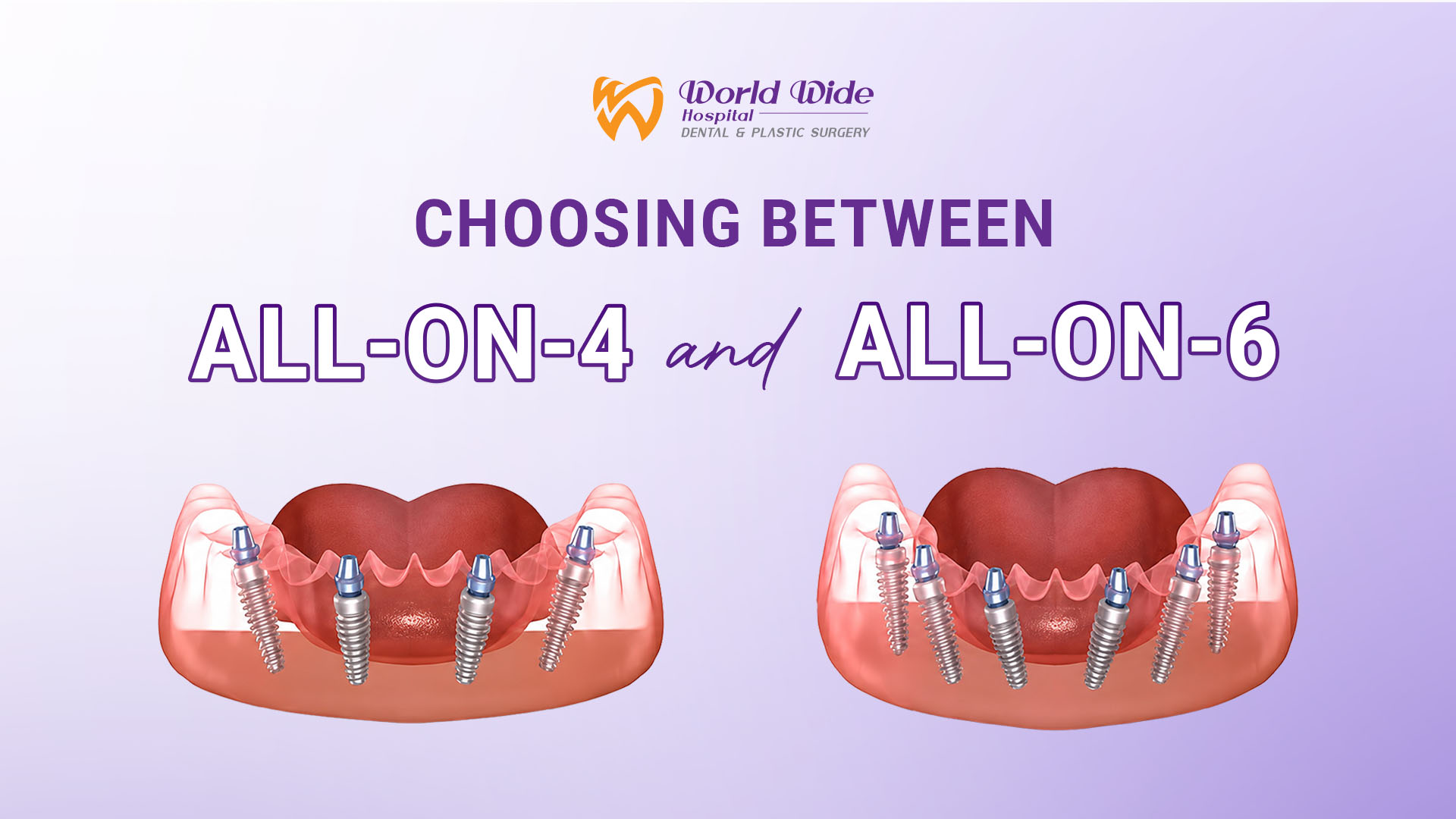
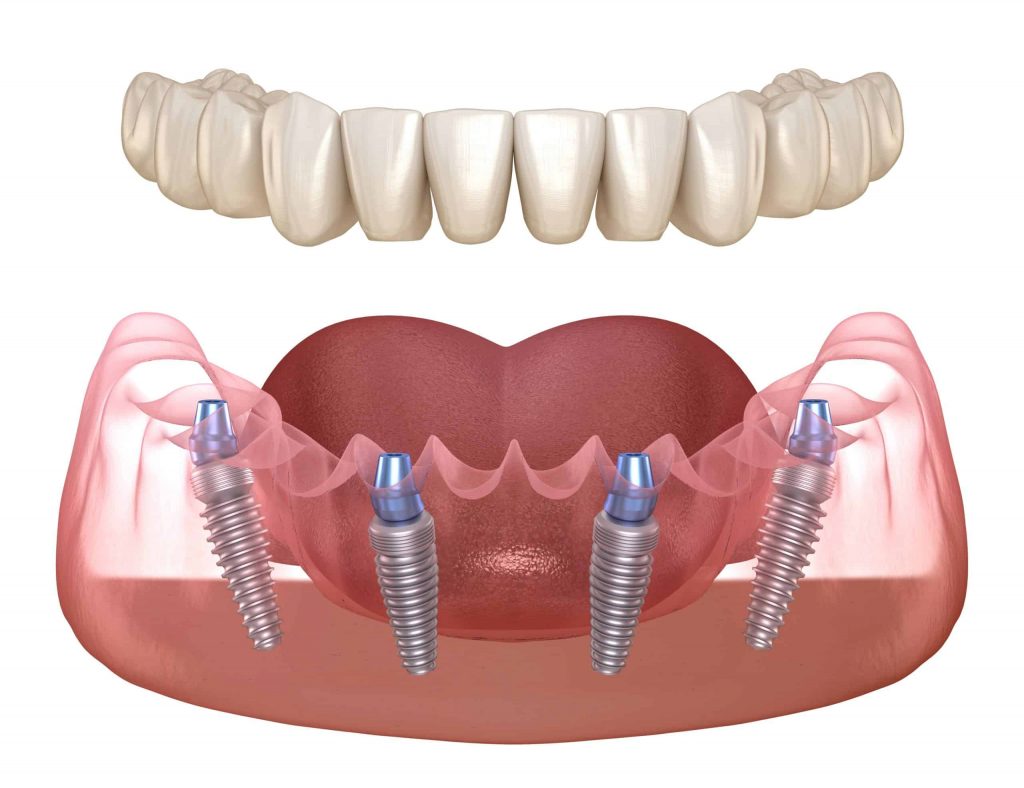
All-on-4 restores a full arch of teeth using four implants positioned at carefully selected points along the jaw to support a fixed full-arch restoration.
Typically, the two front implants are placed relatively straight, while the back implants may be angled to suit the patient’s anatomy and the planned restoration.
A key advantage of All-on-4 is that it can make strategic use of available bone, potentially reducing the need for bone grafting in suitable cases.
All-on-6
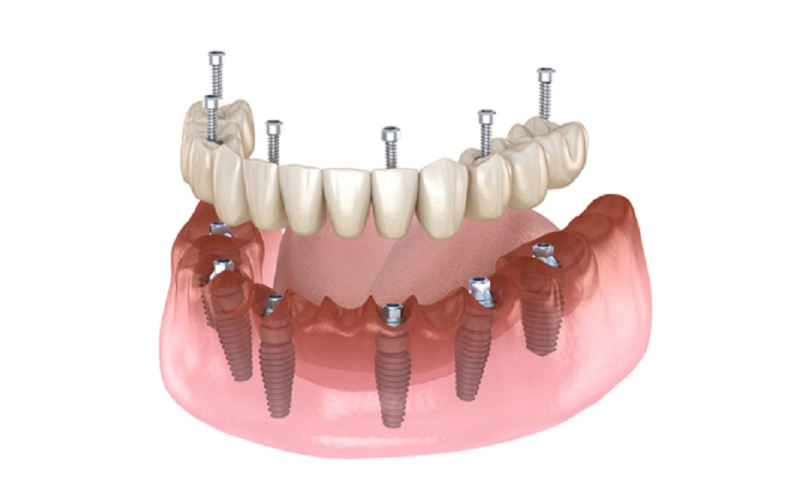
All-on-6 uses six implants in one jaw to support a fixed full-arch restoration.
The additional implants provide greater support and help distribute chewing forces more evenly across the full arch. However, All-on-6 is only suitable when the jawbone and surrounding anatomy allow all six implants to be placed in the planned positions.
All-on-6 is therefore not simply All-on-4 with two additional implants. It must be planned as a complete full-arch restoration from the outset.
When May All-on-4 Be Recommended?
Complete Tooth Loss or Teeth That Cannot Be Saved
All-on-4 is often considered for patients who require full-arch rehabilitation, either because all the teeth in one jaw are missing or because the remaining teeth cannot be reliably maintained over the long term.
Rather than placing a separate implant for every missing tooth, the dentist uses four carefully planned implants to support a fixed full arch of teeth.
Bone Loss Requiring Strategic Use of Available Bone
In patients who have been missing teeth for many years, bone loss can make the placement of a larger number of implants more difficult.
Where appropriate, All-on-4 implants can be carefully positioned and angled in areas with sufficient bone, reducing the need for extensive bone grafting.
However, All-on-4 does not eliminate the need for bone grafting in every case. The final decision depends on each patient’s actual bone anatomy.
Full-Arch Rehabilitation with an Optimal Number of Implants
By supporting a full-arch restoration on four implants, All-on-4 uses an appropriate number of implants while aiming to restore chewing function when correctly indicated and carefully designed.
This is one reason the approach is widely used for complete tooth loss, particularly among older patients and those who have been missing teeth for a long time.
When May All-on-6 Be Recommended?
Adequate Jawbone for the Placement of Six Implants
A key requirement for All-on-6 is sufficient suitable bone across the jaw to allow all six implants to be positioned safely.
Before making a recommendation, the dentist uses a 3D cone beam CT scan to assess bone height, width and density, as well as the location of important anatomical structures.
Additional implants should not be placed simply to reach a total of six when the bone conditions are unsuitable.
Additional Support for the Full-Arch Restoration
Six implants provide additional support points for the full-arch restoration, allowing chewing forces to be distributed across more areas.
All-on-6 may be considered when the jawbone can accommodate six implants, or when chewing forces and the planned restoration call for additional support to distribute forces across the full arch.
A Restorative Plan and Bite Suited to All-on-6
The number of implants is not determined by bone condition alone.
The dentist must also consider the length of the dental arch, the space available for the restoration, the relationship between the upper and lower jaws, chewing forces, the opposing teeth and the type of final restoration planned.
For this reason, two patients with complete tooth loss may receive different recommendations: All-on-4 for one and All-on-6 for the other.
How Do All-on-4 and All-on-6 Compare?
| CRITERIA | ALL-ON-4 (4 IMPLANTS) | ALL-ON-6 (6 IMPLANTS) |
|---|---|---|
| STABILITY & CHEWING FORCE | Reliable stability; ideal for everyday chewing. | Maximum bite force; superior pressure distribution. |
| BONE DENSITY NEEDS | Suitable for low to moderate bone density (often no grafting). | Requires adequate bone volume and density. |
| IDEAL CANDIDATE & AGE | Seniors or patients with bone loss wanting less invasive surgery. | Younger to middle-aged patients demanding high bite strength. |
| COST | Most cost-effective full-arch option. | Higher cost due to additional implants. |
The comparison above is intended as general guidance only. The number of implants alone cannot determine which approach is better.
Is All-on-6 Better Than All-on-4?
A common misconception in full-arch implant treatment is that more implants automatically lead to a better outcome. However, All-on-6 is not necessarily the better option for every patient.
When clinically appropriate and carefully planned, All-on-4 can provide effective full-arch rehabilitation.
By contrast, placing six implants in unsuitable bone simply to increase the implant count may offer no additional clinical benefit.
What matters most is not whether four or six implants are used, but their position and stability, the quality of the bone, the design of the restoration, the bite and how forces are distributed across the jaw.
How Does the Dentist Decide Between All-on-4 and All-on-6?
Jawbone Volume and Quality
A 3D cone beam CT scan allows the dentist to assess the height, width and structure of the bone at each proposed implant site.
In the upper jaw, the relationship to the sinus cavities must also be assessed. In the lower jaw, the dentist evaluates the location of the main nerve canal and other relevant anatomical structures.
Chewing Forces and Bite Condition
A full-arch implant restoration must withstand chewing forces over the long term.
The dentist must therefore assess how the upper and lower jaws meet, chewing forces, patterns of jaw function and how forces will be transferred from the restoration to the implants.
This is also why full-arch implant planning should extend beyond the question, ‘How many implants will be placed?’
The Final Restoration
The implants form the supporting foundation beneath the gums. The teeth above them are the part used for chewing and the part that determines the appearance of the smile.
The number and position of the implants must therefore be planned in coordination with the final restoration from the beginning.
Can All-on-4 Be Used in One Jaw and All-on-6 in the Other?
Yes, if the dentist’s assessment shows that this is the appropriate approach.
The upper and lower jaws in the same patient do not necessarily have the same bone condition, anatomy or load-bearing requirements. The dentist may therefore prepare a different treatment plan for each jaw.
This again demonstrates why full-arch implant treatment should be individualised rather than based on a fixed formula for every patient.
Full-Arch Implant Treatment at Worldwide
Diagnosis Before the Number of Implants Is Determined
At Worldwide Dental Hospital, patients who are missing multiple teeth or a complete arch receive a clinical examination, 3D cone beam CT imaging and a comprehensive bone assessment before the treatment plan is prepared.
Based on the clinical findings, the dentist will determine whether All-on-4, All-on-6 or another full-arch implant approach is appropriate.
The goal is not to place more implants, but to choose the right number and positions based on each patient’s clinical needs, providing a reliable foundation for a long-lasting restoration.
Hospital-Based Care for Complex Full-Arch Implant Cases
Full-arch implant treatment may involve bone loss, bone grafting, sinus lift procedures, medical conditions, or the clinical need for sedation or general anaesthesia.
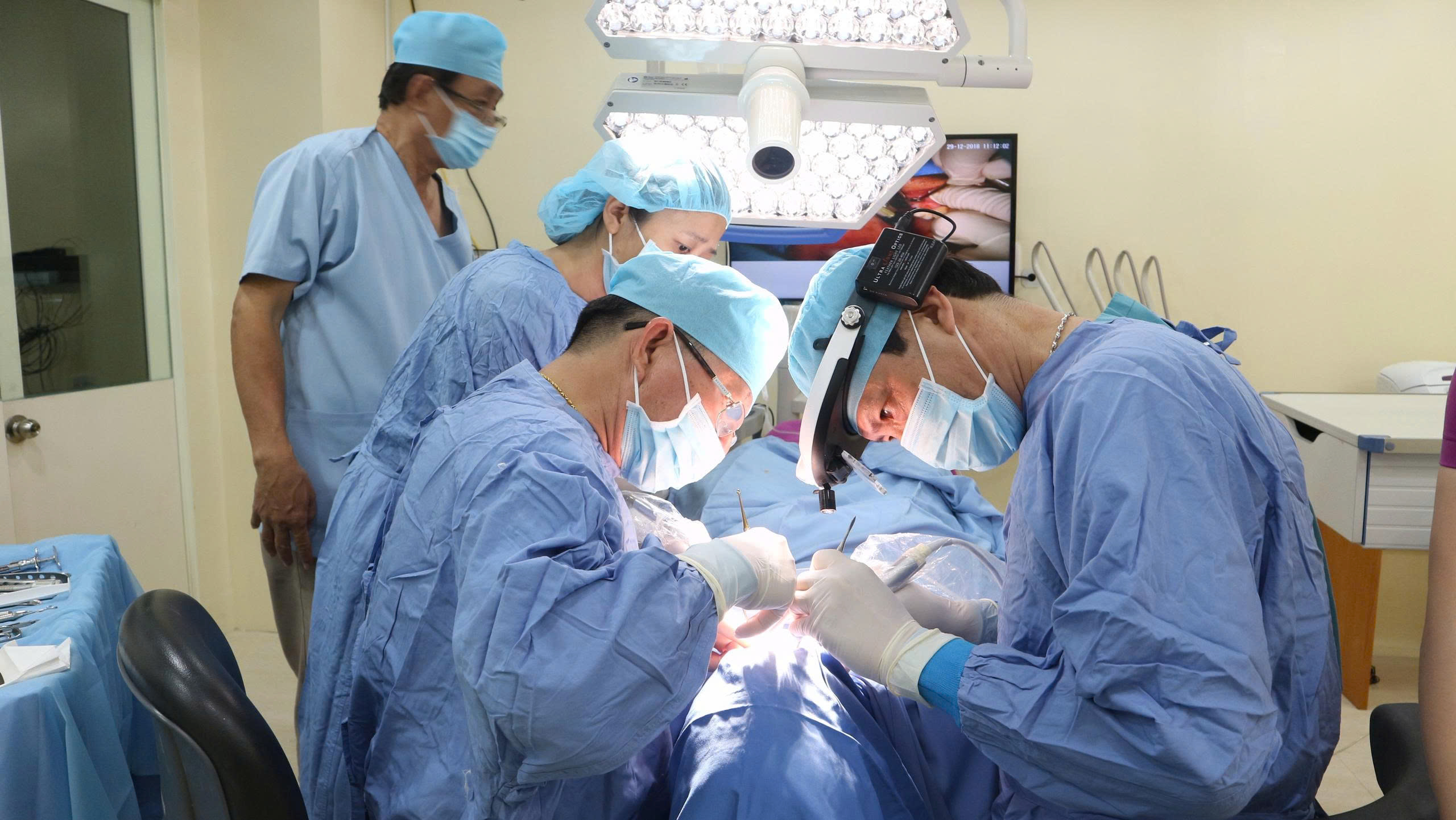
Worldwide Dental Hospital has dentists with advanced implant expertise, fully equipped operating theatres, and authorisation to provide sedation and general anaesthesia within its approved clinical scope. This enables the hospital to assess and plan treatment for complex implant cases in an appropriate clinical setting.
In addition, diagnostic imaging, digital technology and an in-house CAD/CAM dental laboratory support close coordination from implant planning through to the design of the final restoration.
Conclusion: Clinical Suitability Matters More Than the Number Four or Six
All-on-4 and All-on-6 are both full-arch treatments for patients who have lost all teeth in one jaw. The difference is not limited to the use of four or six implants; it also involves bone condition, force distribution, implant positions and the restorative plan for each patient.
Rather than asking, ‘Is All-on-4 or All-on-6 better?’, a more appropriate question is:
“Given my bone condition and treatment needs, which approach will provide the more appropriate and durable foundation for my restoration?”
At Worldwide Dental Hospital, patients are examined directly by an experienced implant dentist, receive 3D cone beam CT imaging and have an individualised treatment plan prepared before the number of implants is determined.
Arrange a consultation with an experienced dentist at Worldwide Dental Hospital to assess the bone condition and determine the appropriate full-arch implant treatment.
