
OVERVIEW
Proven Orthodontic Treatment for a Straighter, Healthier Smile
Crowded teeth, gaps, rotated teeth, and bite problems can affect both the appearance and function of your smile.
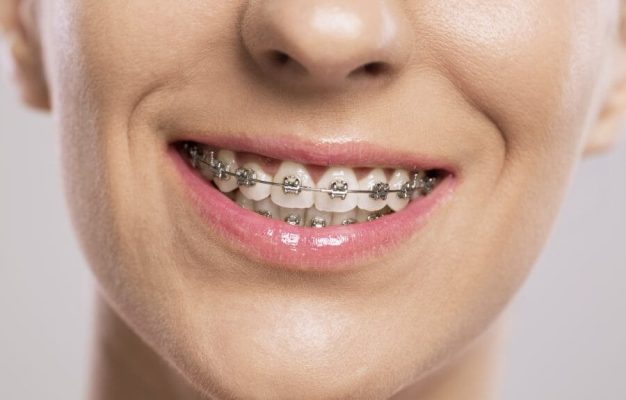
Traditional braces use metal brackets and orthodontic wires to gradually move teeth into healthier and more balanced positions.
With decades of clinical experience and modern orthodontic planning, traditional braces remain one of the most reliable solutions for correcting a wide range of orthodontic conditions.
What Are Traditional Braces?
Traditional braces are a fixed orthodontic appliance consisting of:
- Metal brackets bonded to the teeth
- Archwires that guide tooth movement
- Elastic ligatures that secure the wire to the brackets
The orthodontic wire applies controlled forces to gradually move the teeth. Over time, the teeth are repositioned into a more functional and aesthetically balanced alignment.
INDICATIONS
What Can Traditional Braces Treat?
Crowded Teeth
When there is insufficient space for the teeth to align properly.
Gaps Between Teeth
Braces can gradually close spaces between teeth.
Overbite
When the upper front teeth overlap the lower teeth excessively.
Underbite
When the lower teeth extend beyond the upper teeth.
Crossbite
When one or more teeth are positioned inside or outside the normal bite relationship.
Open Bite
When the upper and lower teeth do not properly meet when the mouth is closed.
Rotated Teeth
Braces can gradually correct teeth that have rotated out of their normal orientation.
CANDIDATES
Who Can Benefit from Traditional Braces?
Traditional braces may be suitable for:
- Children and teenagers
- Young adults & Adults
- Patients with mild to complex malocclusion
- Patients requiring significant tooth movement
- Patients who prefer a proven fixed orthodontic system
Age alone does not determine whether orthodontic treatment is possible. The orthodontist must evaluate the patient’s teeth, gums, bone support, bite, and overall oral health before treatment.
TREATMENT PROCESS
Traditional Braces Treatment Process
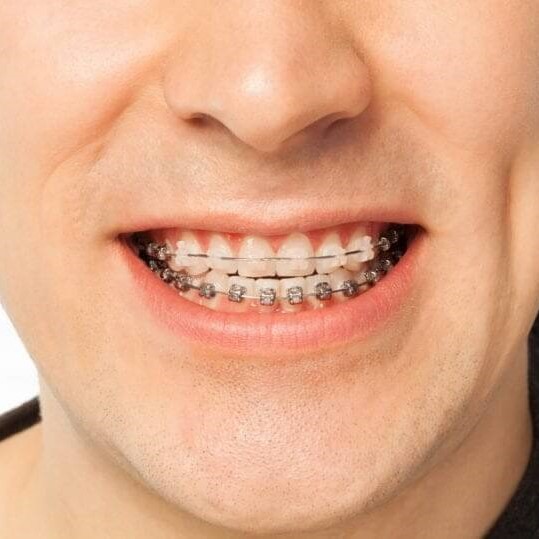
Traditional braces work by applying controlled, continuous forces to the teeth. The process involves several stages: Bracket → Archwire → Controlled Force → Tooth Movement → New Alignment. Because tooth movement is a biological process, treatment takes time and requires regular follow-up appointments.
01
Orthodontic Consultation
Evaluate tooth alignment & bite
02
Diagnostic Records
Photos, scans, & X-rays
03
Treatment Planning
Customized sequence of movement
04
Bracket Placement
Carefully bonded to the teeth
05
Regular Adjustments
Periodic appointments for force adjustment
06
Final Alignment
Braces removed, bite evaluated
07
Retention
Retainers to maintain new positions
ADVANTAGES
Benefits of Traditional Braces
Proven Treatment
Used successfully for decades and remain one of the most established methods.
Effective Movement
They can provide precise control over individual tooth movement.
Suitable for Complex Cases
Can be used for many types of malocclusion requiring significant movement.
Predictable Mechanics
The orthodontist can control the force and direction of tooth movement throughout treatment.
No Need to Remember
Because traditional braces are fixed to the teeth, patients do not need to remember to put them in or take them out.
COMPARISON
Traditional Braces vs. Alternatives
Traditional Braces vs. Clear Aligners
Neither treatment is automatically better. The appropriate option depends on the patient’s orthodontic condition, treatment goals, lifestyle, and clinical requirements.
Traditional Braces vs. Ceramic Braces
LIFESTYLE & CARE
During Treatment
Oral Hygiene Is Essential
Braces create additional areas where food and plaque can accumulate.
Patients should pay particular attention to: Brushing around brackets, Cleaning between teeth, Using interdental brushes, and Following the orthodontist’s hygiene recommendations.
Good oral hygiene helps reduce the risk of cavities, gum inflammation, and white-spot lesions during orthodontic treatment.
Foods to Avoid
Hard and sticky foods can damage brackets or wires.
Patients may be advised to limit: Hard candies, Chewy candy, Ice, Very hard nuts, Sticky foods, and Foods that require excessive biting force.
Cutting harder foods into smaller pieces can make eating easier and reduce stress on the orthodontic appliance.
KNOWLEDGE CENTER
Frequently Asked Questions
Are traditional braces suitable for adults?
Yes. Adults can undergo orthodontic treatment as long as their teeth, gums, and supporting bone are healthy enough for orthodontic movement.
How long do I need to wear braces?
Treatment time varies. Many cases take around 18-24 months, while simpler or more complex cases may take less or more time.
Can braces fix an overbite?
Yes. Traditional braces can be used to correct many types of overbite depending on the severity and underlying jaw relationship.
Do I need to have teeth extracted?
Not necessarily. Extraction depends on available space, crowding severity, facial profile, tooth position, and the overall treatment plan.
Can I eat normally with braces?
Most foods can still be enjoyed, but hard and sticky foods should be avoided because they can damage brackets or wires.
What happens after braces are removed?
You will need to wear retainers to help maintain the corrected tooth positions.
Are braces painful?
Some pressure and temporary discomfort are normal, particularly after placement and adjustments. Severe or persistent pain should be evaluated by your orthodontist.
START YOUR ORTHODONTIC JOURNEY
Book an Orthodontic Consultation
Traditional braces remain a reliable solution for correcting tooth alignment and bite problems. With careful diagnosis, personalized treatment planning, and consistent follow-up, orthodontic treatment can help create a healthier and more balanced smile.
*Your information is kept strictly confidential.
