
PROCEDURE OVERVIEW
What is Revision Rhinoplasty?
Revision Rhinoplasty is a corrective nose surgery procedure designed to address deformities, complications or unsatisfactory results following previous rhinoplasty.
At Worldwide Hospital, revision rhinoplasty is used for cases where the nose has become deformed, crooked, exposed, infected or otherwise aesthetically unsatisfactory after previous surgery.
The appropriate corrective technique is selected according to the condition and structure of each patient’s nose.
SUITABLE CANDIDATES
Who May Need Revision Rhinoplasty?
Revision rhinoplasty may be considered in cases such as:
- The nose has been damaged or broken following an accident.
- The nose becomes deformed after previous rhinoplasty.
- The nasal tip becomes red or swollen.
- The nasal implant becomes displaced.
- Infection develops around the previous surgical area.
- The nose becomes crooked or asymmetrical.
- The nose is congenitally crooked.
- Previous rhinoplasty has produced an unsatisfactory result.
COMMON CONDITIONS
Complications We Treat
Red or Exposed Nasal Tip
When the nasal tip becomes red after previous rhinoplasty, Worldwide describes this as one of the milder levels of nasal complications.
The doctor may use autologous cartilage or artificial cartilage to reinforce and reshape the nasal tip, depending on the individual condition.
Exposed Nasal Implant
If the previous nasal implant becomes exposed, the doctor first evaluates the condition of the nose and determines the appropriate corrective approach.
The old cartilage or implant may need to be removed and replaced with a new material. Autologous cartilage may be used because of its compatibility with the body and its role in reducing the risk of further complications.
Previous Complications
In cases involving inflammation, skin perforation or other complications after previous rhinoplasty, the patient should be examined promptly. Delaying treatment may allow the condition to become more serious, potentially resulting in infection or tissue necrosis.
To reinforce the nasal tip, the doctor may use autologous cartilage to increase the thickness and strength of the nasal tissue.
Crooked Nose
A crooked nose may result from congenital conditions, accidents, or previous surgery. It can affect aesthetics and function (obstruction, headaches, reduced smell).
Depending on severity, the doctor may perform septal correction, nasal restructuring, or septal correction combined with rhinoplasty to create a balanced, natural-looking nose while addressing functional problems.
OUR TECHNIQUES
Corrective Rhinoplasty Techniques
Worldwide emphasizes that corrective rhinoplasty is a complex technique requiring a high level of expertise. Depending on the patient’s condition, we may use different corrective approaches.
Autologous Cartilage
The patient’s own cartilage can be used to reinforce or reconstruct the nose.
Implant Replacement
When a previous implant is exposed, displaced or unsuitable, the doctor may remove it and replace it with an appropriate material.
Nasal Tip Reconstruction
Autologous cartilage can be used to reinforce the nasal tip and improve its shape.
Septal Correction
For a crooked nose caused by septal deviation, the doctor may correct the nasal septum to improve balance and function.
OUR PROCESS
The Procedure
Examination
The doctor directly examines the nose, evaluates the condition, and identifies the cause of the deformity.
Health Check
The patient undergoes a general health examination before surgery.
Assessment
The doctor evaluates the existing structure and designs a new nasal shape according to facial proportions.
Anesthesia
The nasal area is prepared and anesthesia is administered before surgery.
Corrective Surgery
Removing material, correcting the septum, reconstructing structure, or replacing the implant.
Follow-Up
The area is closed and the patient receives postoperative instructions and a follow-up schedule.
RECOVERY GUIDE
Postoperative Care
After revision rhinoplasty, patients receive a Home Care Guide from the medical team. The instructions include:
- Take medication as prescribed by your doctor.
- Maintain proper wound hygiene at home.
- Follow the postoperative nose surgery instructions.
- Attend follow-up appointments on time.
- Follow all instructions provided by the medical team.

RESULTS GALLERY
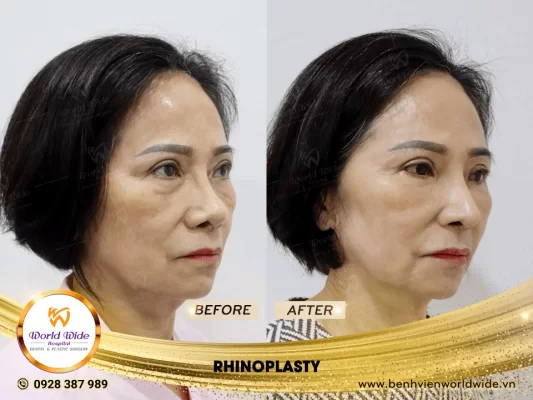
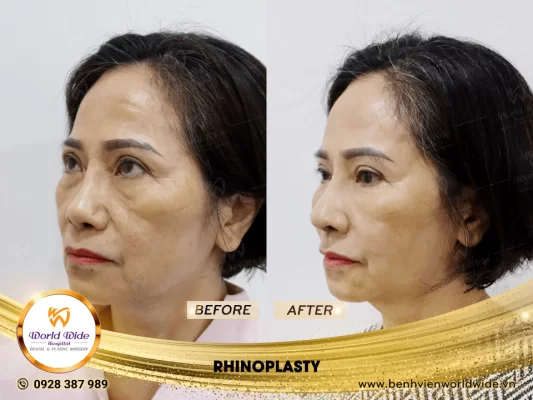
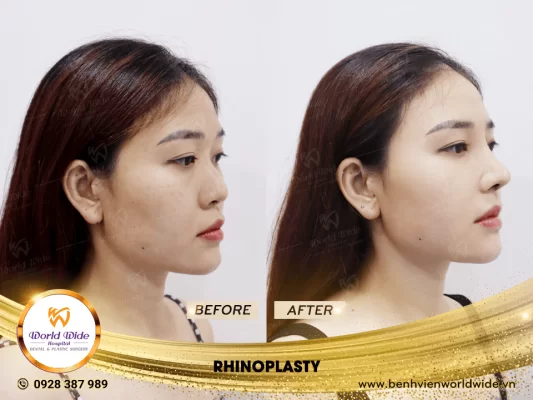
Before & After Results
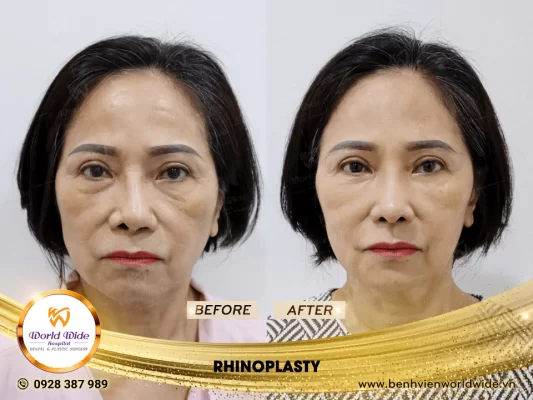
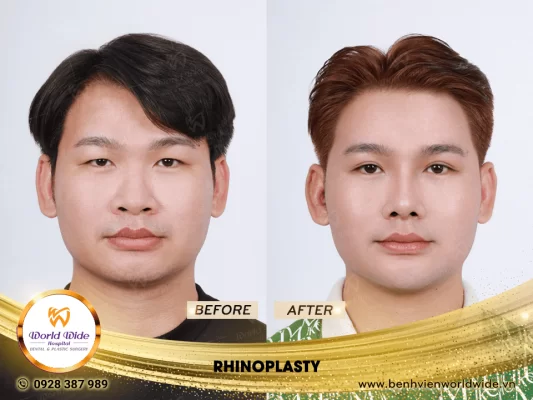
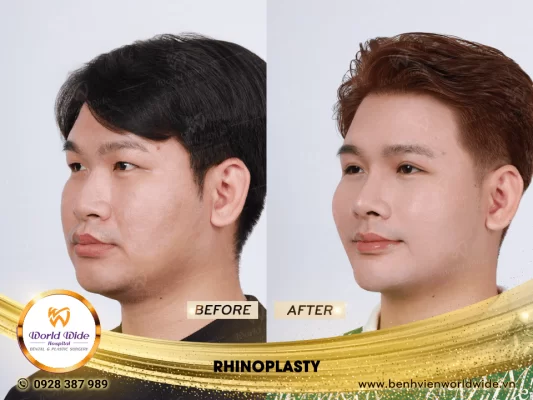
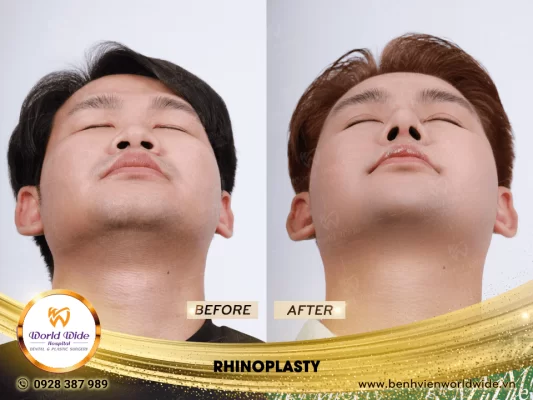
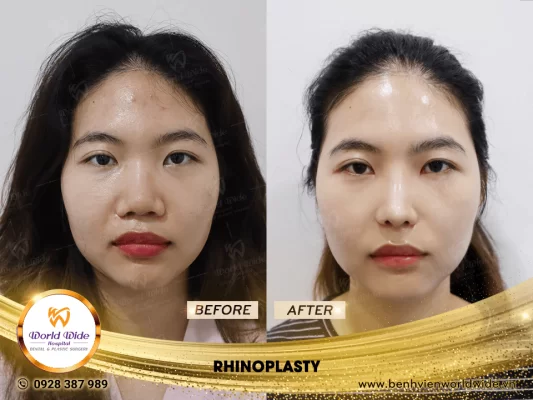
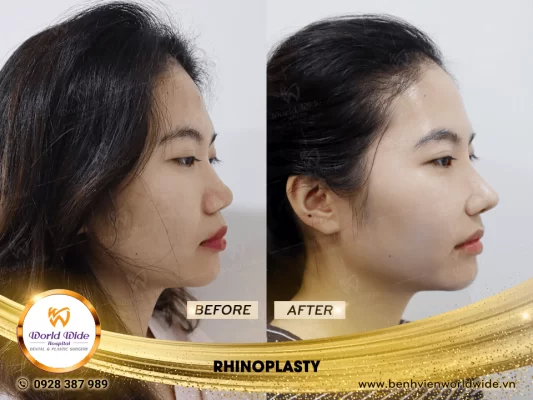
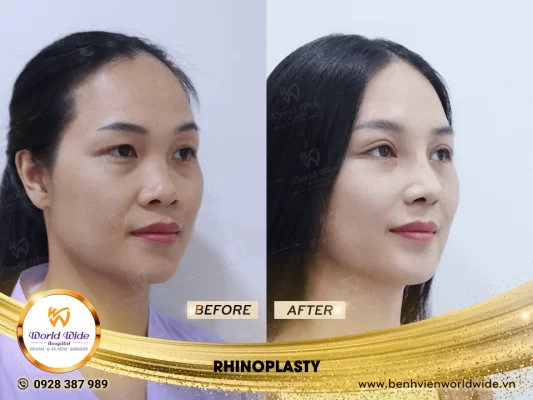
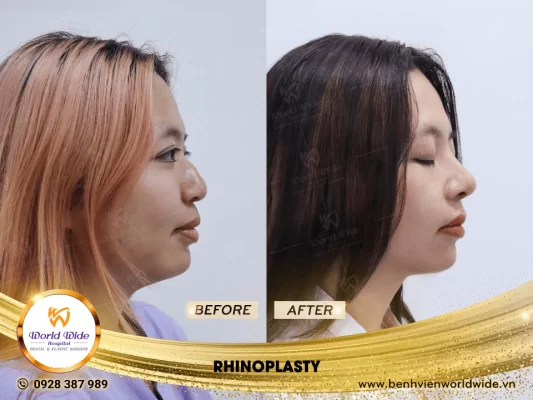
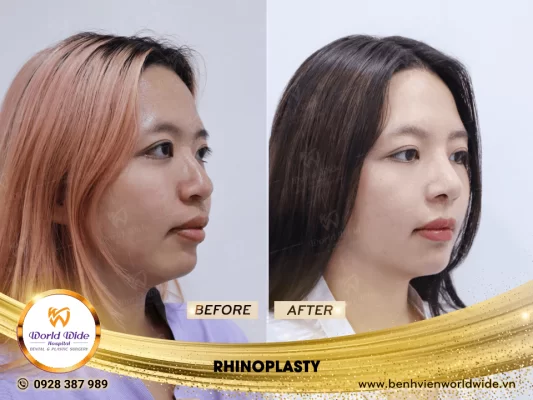
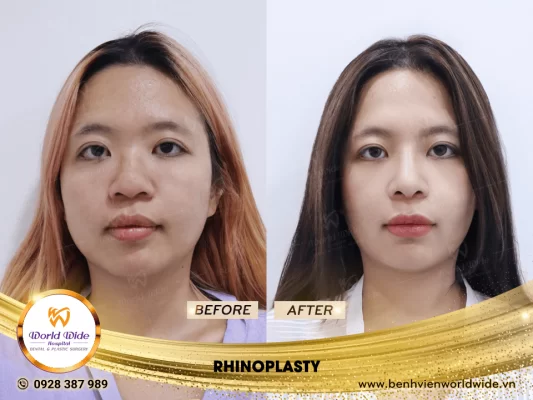
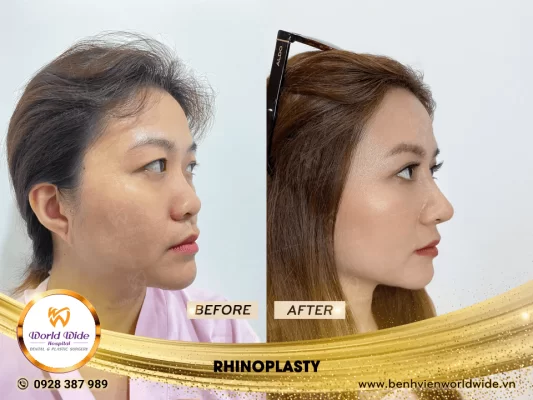
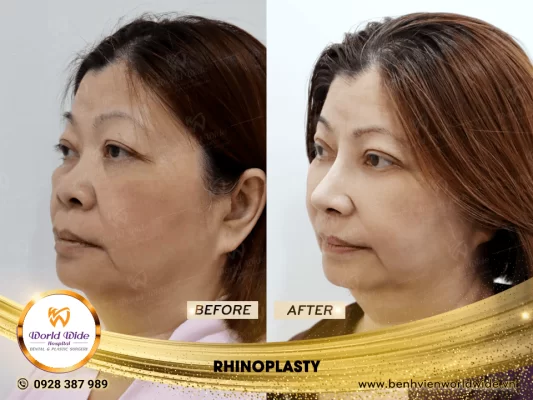
Worldwide presents actual patient cases demonstrating results from its nose correction and revision procedures.
WHY CHOOSE US
Why Choose Worldwide?
Our nose correction procedures are performed by qualified doctors and nurses with professional training.
Experienced Doctors
Doctors directly perform the procedure and select the appropriate technique.
Comprehensive
Treatment addresses tip problems, exposed implants, crooked noses, and complications.
Medical Standards
Procedures follow the standards set by the Ministry of Health.
Postoperative Care
Patients receive dedicated postoperative care and follow-up support.