
Blog
WHAT ARE THE DIFFERENT TYPES OF DENTAL IMPRESSIONS?
Learn about traditional dental impressions and digital scans, their benefits and limitations, and how PIC technology supports full-arch implant restorations.
Dental impressions are an important part of many dental treatments, including crowns, veneers, orthodontics and dental implants. They allow dentists to capture the shape of your teeth and surrounding structures, providing information needed to design restorations that fit your mouth.
Today, two commonly used methods are traditional dental impressions, which use moulding materials, and digital impressions, which use an intraoral scanner (a small handheld scanner used inside the mouth).
Each method has its own benefits and limitations. For more complex treatments, such as full-arch implant restorations, dentists may also use specialised technology to record the precise positions of dental implants.
So, how do these methods differ, and when might additional technology be needed?
What Are Dental Impressions and Why Are They Important?
A dental impression is a record of the shape of your teeth, gums and other relevant structures inside your mouth. It is used to create a model that helps your dentist plan treatment or design dental restorations.
Depending on your treatment, dental impressions may be used to:
- Design dental crowns, bridges and porcelain veneers.
- Create restorations supported by one or more dental implants.
- Design full-arch fixed implant restorations.
- Plan orthodontic treatment and create orthodontic appliances.
- Make mouthguards, night guards and other dental appliances.
- Record the shape of your dental arches and help assess how your upper and lower teeth fit together.
Accurate dental impressions are important because the information collected is used to design and make your restoration.
For example, if an impression does not accurately capture the shape of a prepared tooth, the finished crown may not fit as intended. Your dentist may then need to adjust the crown, take another impression or arrange for a new one to be made.
This is why taking dental impressions is more than simply making a mould of your teeth. It is an important step in producing a restoration that fits properly.
What Types of Dental Impressions Are Available?
There are two commonly used approaches to taking dental impressions:
- Traditional impressions: A dental tray filled with impression material is used to record the shape of your teeth, gums and surrounding structures.
- Digital impressions: An intraoral scanner captures images inside your mouth and creates a three-dimensional (3D) digital model.
Both methods collect information about your teeth and mouth. The main differences are how the information is captured, how comfortable the procedure may feel and how the data is processed.
For implant restorations, dentists may also use specialised systems such as PIC, which records the positions of multiple implants in relation to one another. This technology supports certain stages of implant restoration planning rather than replacing conventional or digital impressions entirely.
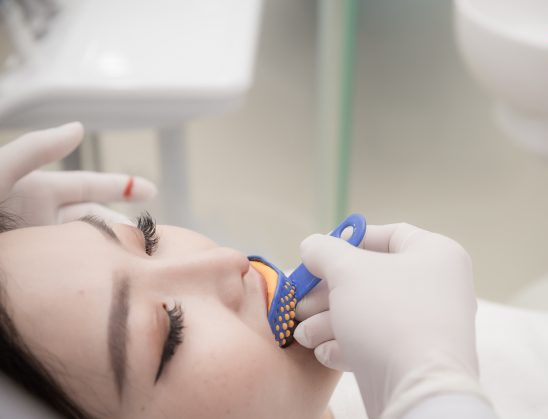
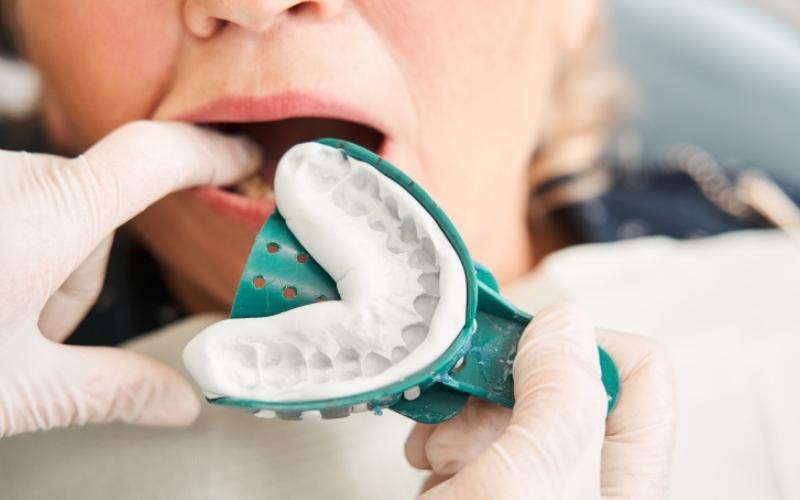
Traditional Dental Impressions
How Are Traditional Impressions Taken?
With traditional impressions, your dentist places a soft impression material into a specially designed tray. The tray is then positioned over your teeth to capture their shape and the surrounding areas.
You will need to keep the tray in your mouth until the material has set. Your dentist then removes it and checks whether the required details have been recorded.
The impression may be used to create a physical model of your teeth or sent to a dental laboratory for further processing.
Different materials and techniques may be used depending on the type of treatment.
Benefits of Traditional Dental Impressions
Traditional impressions have been used in dentistry for many years and remain useful in modern dental care.
Their main benefits include:
- Suitable for many types of restorations: They can be used for crowns, bridges, removable dentures and implant-supported restorations.
- A range of materials and techniques: Dentists can select different impression materials and methods to suit specific treatment requirements.
- Useful in certain clinical situations: Specialised impression techniques can record how soft tissues behave, which may be important when making some types of removable dentures.
When carried out correctly, traditional impressions can provide reliable information for many dental restorations.
Limitations of Traditional Dental Impressions
One of the main drawbacks is the discomfort some patients experience during the procedure.
The tray and impression material need to remain in your mouth while the material sets. This can create a feeling of fullness or trigger gagging, particularly if you have a sensitive gag reflex.
Traditional impressions may also involve several stages:
Taking the impression → Checking the impression → Creating a dental model → Designing and making the restoration
Errors can occur at different stages. For example:
- The impression material may become distorted.
- Air bubbles or missing details may affect the impression.
- The physical model may become distorted during production or handling.
If an impression does not capture the required details accurately, your dentist may need to take it again before the restoration can be made.
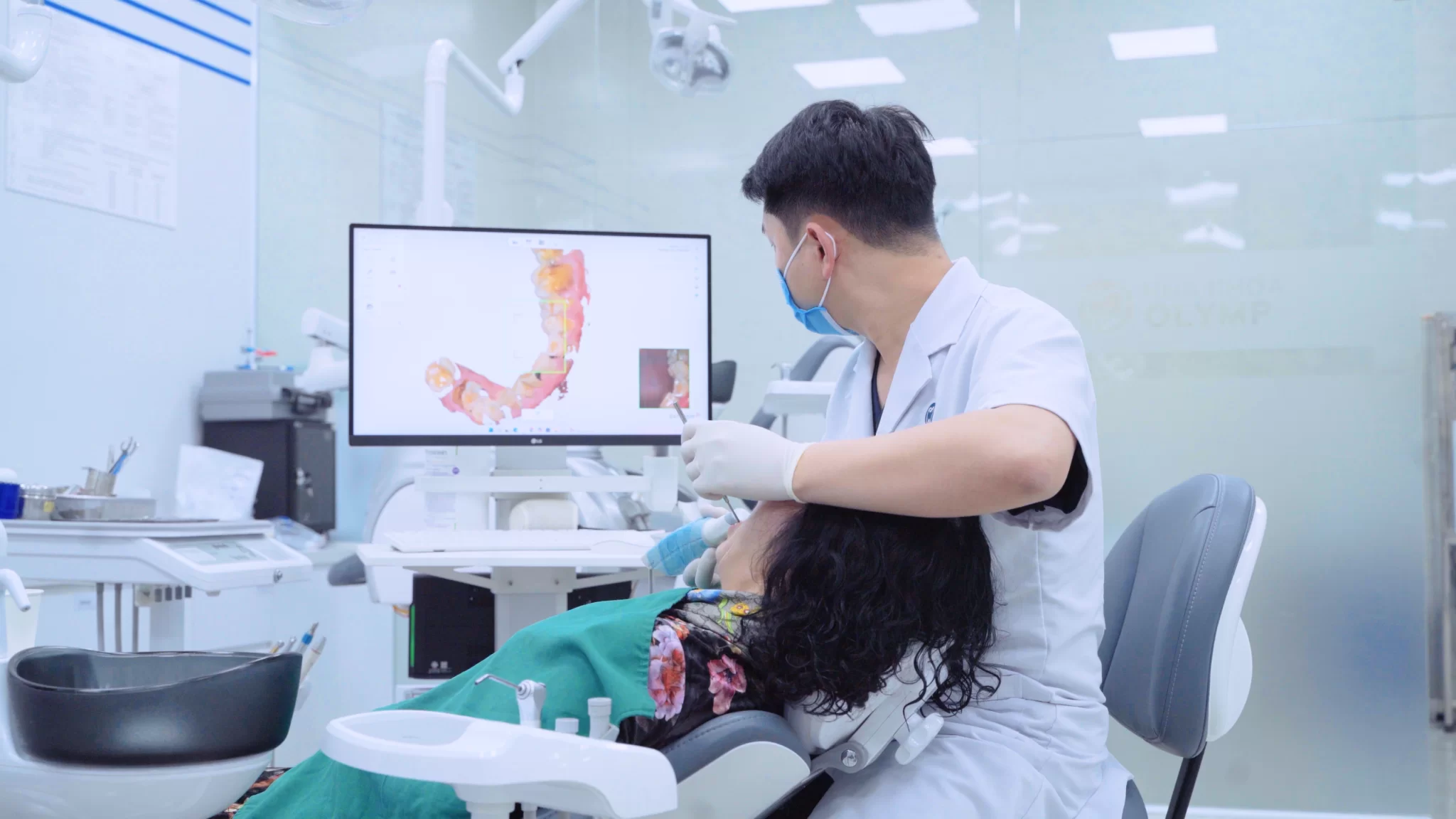
Digital Dental Impressions Using an Intraoral Scanner
How Do Digital Dental Impressions Work?
Instead of using a tray filled with impression material, your dentist moves a small handheld scanner around your mouth to capture images of your teeth and surrounding structures.
The scanner processes this information into a 3D digital model, which can be viewed on a screen.
Your dentist can check the scan as it is being taken. If an area has not been captured clearly, it can often be scanned again without repeating the entire procedure.
The digital model can then be sent to design software or a dental laboratory to help produce your restoration.
Benefits of Digital Dental Impressions
A more comfortable experience
One of the most noticeable benefits is comfort.
Because there is no need to hold a tray filled with impression material in your mouth, digital scanning is often more comfortable, particularly for patients who experience gagging during traditional impressions.
Immediate review of the scan
Your dentist can view the 3D model on a screen and check whether the necessary details have been captured.
If a small area is missing or unclear, it can often be scanned again without starting the entire procedure from the beginning.
Convenient storage and transfer of information
Digital impressions can be stored electronically and sent directly to a dental laboratory without transporting a physical impression.
In many digital workflows, this can also reduce the need for intermediate steps, such as producing plaster models.
Integration with CAD/CAM technology
Digital impressions can be used with CAD/CAM technology, which stands for computer-aided design and computer-aided manufacturing.
This allows dentists and dental technicians to use digital models when designing and making crowns, bridges, veneers and other suitable restorations.
Limitations of Digital Dental Impressions
Although digital scanning offers several advantages, it is not always more accurate or more suitable than traditional impressions.
The quality of a digital scan depends on factors such as:
- The scanner and its technical capabilities.
- The experience and technique of the person performing the scan.
- How well saliva, bleeding and soft tissues can be managed.
- Whether the scanner can clearly capture the required areas.
- The size of the area being scanned, from a single tooth to an entire dental arch.
- The type of restoration being planned.
For example, scanning a single tooth for a crown generally involves a relatively small area.
By comparison, a full-arch implant restoration requires the dentist to record the positions of several implants spread across the jaw.
This can make the scanning process more demanding, and the dentist may need to consider additional techniques depending on the equipment and treatment requirements.
Traditional vs Digital Dental Impressions: A Comparison
| Feature | Traditional impressions | Digital impressions |
| How they work | A tray and impression material capture the shape of the teeth | An intraoral scanner creates a 3D digital model |
| Type of record | Physical impression, which can be used to create a dental model | Digital 3D model |
| Patient comfort | May cause fullness or discomfort | Generally more comfortable |
| Gag reflex | The tray and material may trigger gagging | Usually less likely to trigger gagging |
| Checking the result | Impression is checked after removal | Scan can be reviewed on screen |
| Missing details | Another impression may be needed | Missing areas can often be rescanned |
| Storage | Physical impressions or models need to be stored | Data can be stored electronically |
| CAD/CAM integration | An additional digitisation step may be needed | Can integrate directly into digital workflows |
| Main limitations | Discomfort and potential errors across several processing stages | Depends on equipment, technique and clinical conditions |
Digital impressions offer clear advantages in comfort, convenience and integration with modern dental technology.
However, traditional impressions remain appropriate for many treatments. The best method depends on what information your dentist needs, rather than which technology is newer.
Why Is Accuracy Particularly Important for Full-Arch Dental Implants?
For a single dental implant, the dentist needs to record the implant’s position and the surrounding structures to design the replacement tooth.
Full-arch treatments, such as All-on-4 and All-on-6, are more complex because several implants support one fixed restoration that replaces a full arch of teeth.
These implants are positioned at different points along the jaw. To produce a restoration that fits properly, the dentist needs an accurate record of how the implants are positioned in relation to one another.
If the recorded positions are inaccurate, the finished restoration may not fit as intended and could require adjustment or remaking.
Unlike natural teeth, which have a small amount of movement within their supporting tissues, dental implants are fixed directly to the jawbone.
This makes achieving a precise, passive fit particularly important. A passive fit means the restoration sits on the implants without creating unnecessary tension when secured in place.
For this reason, some full-arch implant cases may benefit from specialised technology designed to record implant positions more precisely.
What Is PIC Technology and How Does It Help?
PIC is a system that uses photogrammetry, a technique that calculates positions and distances from photographic measurements.
Unlike a conventional intraoral scanner, which primarily captures surface details to create a 3D model, PIC is designed to record the positions and orientations of multiple dental implants in relation to one another.
It does this using specialised components attached to the implants during the recording process.
The information collected by PIC can then be combined with intraoral scans and other relevant data to help design the final restoration.
In certain full-arch implant cases, photogrammetry may provide more accurate implant-position data than some conventional intraoral scanning workflows. However, results still depend on the equipment, technique and clinical conditions.
PIC does not replace intraoral scanning entirely. The two technologies capture different types of information and can be used together as part of a digital implant restoration workflow.
Your dentist will determine whether PIC is appropriate based on the number of implants, the planned restoration and the requirements of your treatment.
Which Dental Impression Method Is Right for You?
There is no single impression method that is best for every patient or every treatment.
For dental crowns, veneers and certain orthodontic appliances, digital scanning often offers practical advantages, including greater comfort and the ability to review the scan immediately.
Traditional impressions may still be preferred when specific materials or impression techniques are needed, such as for certain removable dentures.
For full-arch implant restorations, your dentist may use a combination of intraoral scanning, PIC technology or other impression techniques to obtain the information required.
The most important consideration is whether the method can provide sufficiently accurate information for your planned restoration.
You do not need to decide which impression method to use yourself. Your dentist will assess your oral health and treatment needs before selecting the most appropriate approach.
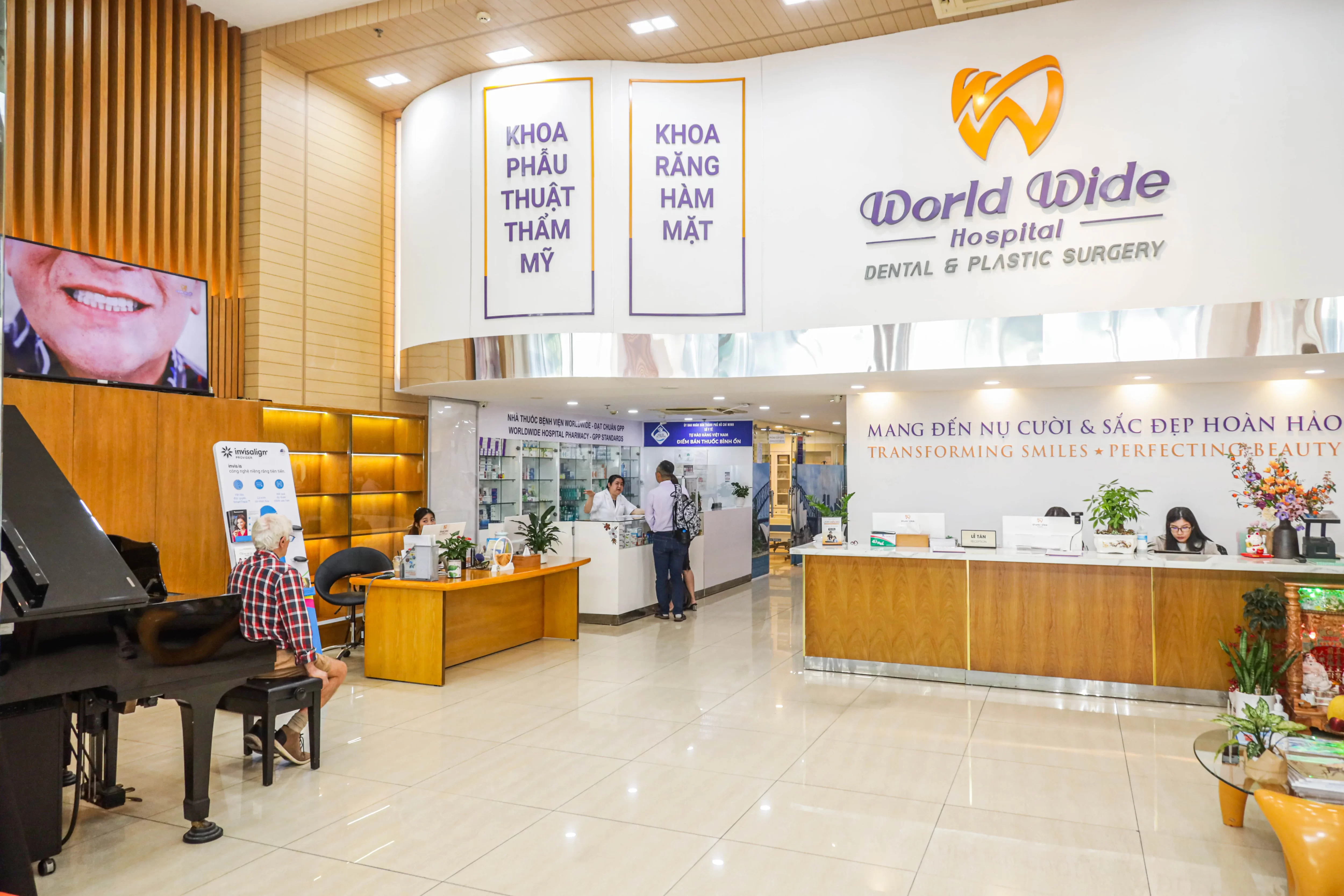
Digital Dental Impression Technology at Worldwide Dental Hospital
Worldwide Dental Hospital uses digital impression and measurement technology to support the planning, design and production of dental restorations.
Intraoral Scanning Systems
The hospital uses digital scanning systems, including iTero, iTero Lumina and TRIOS, as part of suitable dental workflows.
These scanners allow dentists to create 3D models of patients’ teeth, review the captured information and transfer digital records for restoration design.
Depending on the treatment, digital scanning may be used for crowns, veneers, orthodontics and implant-supported restorations.
PIC Technology for Implant Restorations
For suitable implant cases, particularly full-arch restorations, Worldwide Dental Hospital may use PIC technology to record the relative positions of multiple implants.
This information can be combined with other digital records to support the design of the final restoration.
PIC is not required for every patient. Its use depends on the clinical situation and the type of restoration being planned.
In-House CAD/CAM Dental Laboratory
Worldwide Dental Hospital also has an in-house CAD/CAM dental laboratory to support the design and production of dental restorations.
When impressions are captured digitally, dentists and dental technicians can work with the same digital records throughout the design, review and adjustment stages.
Connecting the scanning, design and production processes can help streamline communication and reduce the need to transport physical models in suitable digital workflows.
Conclusion
Traditional impressions and digital scanning are both widely used in modern dentistry, and each has its own benefits and applications.
Traditional impressions remain useful for many treatments, while digital scanning offers advantages in patient comfort, immediate review and integration with CAD/CAM technology.
For more complex treatments, such as full-arch implant restorations, specialised technology like PIC may also be used to help record implant positions accurately.
No single impression method is ideal for every situation. The right approach depends on your oral health, the type of restoration and the requirements of your treatment plan.
At Worldwide Dental Hospital, dentists assess each patient’s needs before selecting the appropriate impression technique and supporting technology, from individual crowns to full-arch implant restorations.
Book a consultation at Worldwide Dental Hospital to discuss your dental needs and the treatment options that may be suitable for you.
